
Lecutre for Fullstack developers
UX Design & Accessibility
Chas Academy - April 2026
Delivered a lecture on UX design and accessibility in IT projects, focusing on how usability, accessibility, frontend implementation, and business goals intersect in real product development.
The lecture explored practical accessibility principles, semantic HTLM, cognitive load, discoverability, WCAG and how development decisions directly shape the user experience
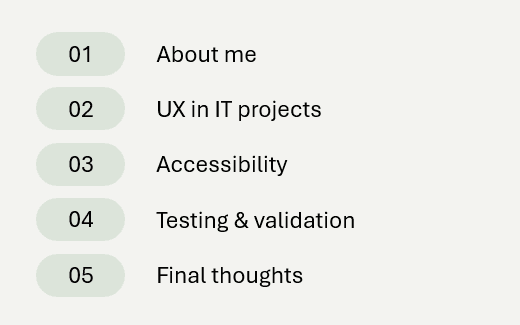
Covered topics
Key takeaways
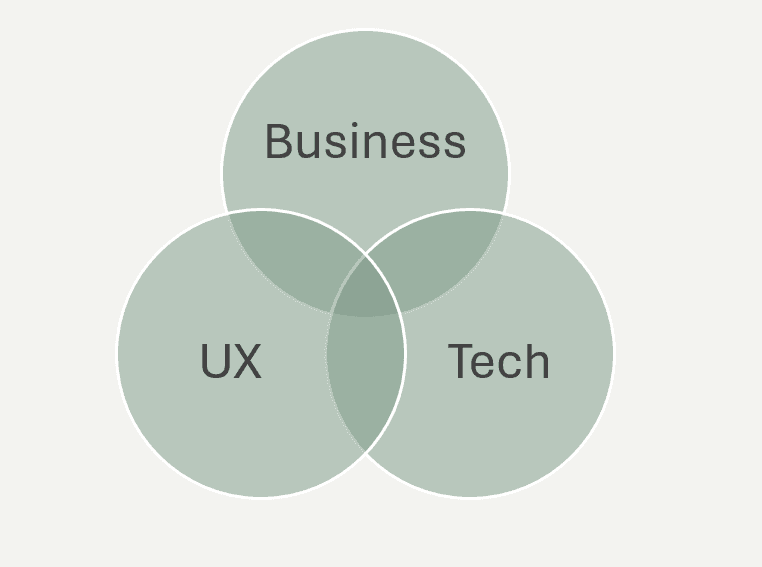
The UX Trinity
Great digital products are created through the balance between UX, business, and technology.
Without UX, systems become difficult to understand. Without technical feasibility, design remains unrealistic. Without business goals, products lose direction.
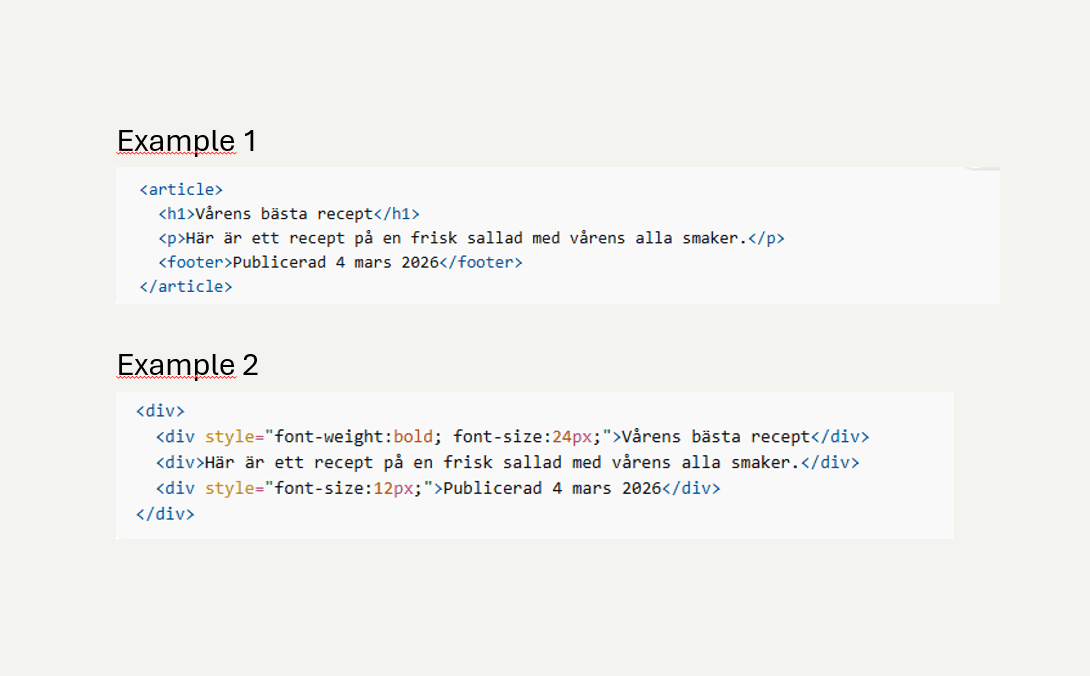
Semantic code matters
Semantic HTLM and accessible frontend practices solve more usability and accessibility problems than complex JavaScript ever will.
Good structure, meaningful components, and clear interactions improve both accessibility and the overall user experience.

Accessibility is quality
Accessibility is not a feature for a small group of users — it improves usability for everyone.
Designing with accessibility in mind creates clearer, more understandable, and more inclusive digital experiences across different contexts, devices, and user needs.
For future project leaders
The lecture highlighted how fullstack developers influence the user experience far beyond visual design. Through frontend structure, semantic HTML, accessibility, error handling, and system behavior, technical decisions directly shape how understandable, usable, and inclusive a product becomes.
By understanding UX principles, accessibility, and real user behavior, developers are better equipped to collaborate across disciplines, make informed technical decisions, and build digital experiences that are not only functional — but meaningful and usable for real people.